


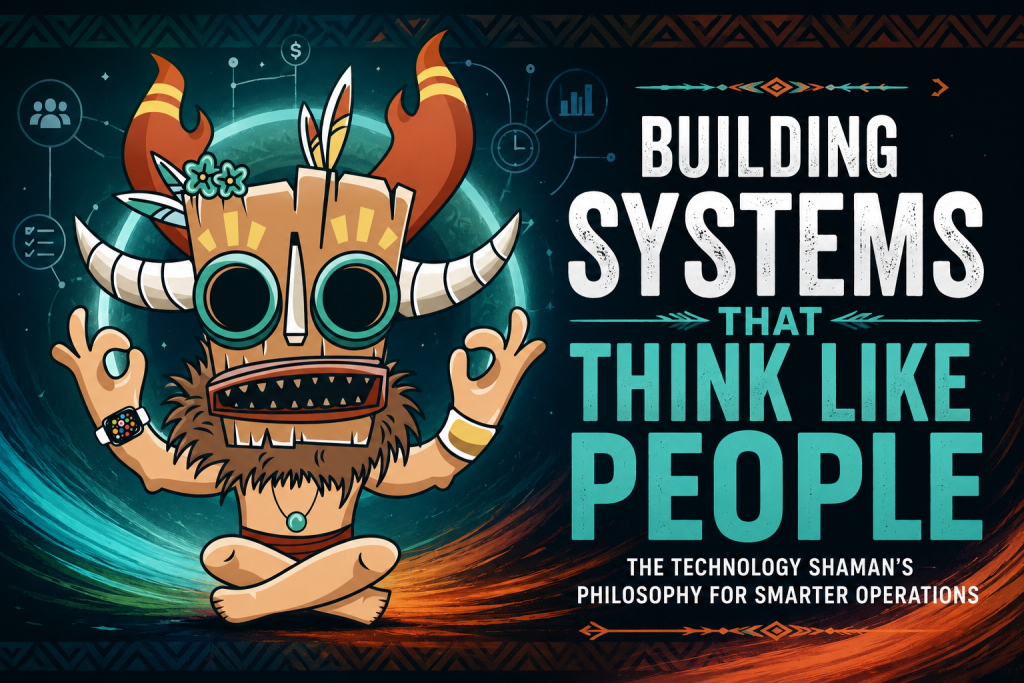
Building Systems That Think Like People
Technology Is About Humans First
People hear the term “Technology Shaman” and sometimes assume it’s just branding. It’s not.
To me, technology shamanism is the belief that technology should adapt to humans, not the other way around. Most operational systems fail because they are built around rigid software logic instead of human behavior. They ignore emotion, stress, communication gaps, instinct, fatigue, and the reality of how people actually operate under pressure.
That creates friction.
The reason I approach technology differently is because I’ve always viewed systems through both a technical and human lens. I pay attention to the energy of operations. Where people get frustrated. Where information gets trapped. Where communication breaks down. Where teams lose momentum because systems stop feeling intuitive.
My role is translating that chaos into clarity.
That philosophy has shaped the operational systems I’ve built at SG Network Services and ultimately helped lead to recognition as a finalist for the Quickbase Empower 2026 Operational Impact Award alongside organizations like HD Supply, Albertsons, and Tractor Supply Co.
But the recognition itself is secondary.
What matters more to me is proving that businesses do not have to accept operational friction as normal.
The Future Belongs to Human-Centered Technology
I believe the future of technology is not colder systems. It’s smarter, more human systems.
For years, industries like field services have operated on tribal knowledge, disconnected spreadsheets, calling it “experience”. Companies often try solving that by adding more software, but more software alone does not solve operational dysfunction.
You have to build systems that think like people.
That means understanding how dispatchers prioritize under stress. How field technicians communicate in real environments. How leadership consumes information. How finance teams need visibility to make decisions quickly and accurately. How operational energy flows across departments.
That’s where technology shamanism becomes important.
It’s not just about software architecture. It’s about understanding human architecture.
At SG, I’ve been fortunate to work with teams willing to challenge outdated operational thinking and embrace forward-thinking systems built around visibility, collaboration, and real-time intelligence. We are not waiting for the industry to evolve. We are helping lead the charge toward what comes next.
And I genuinely believe this is only the beginning.